









Catalog
Global
EN
Account
Steam Gifts
Steam Keys
Game Top-Up
Gift Cards
Full catalog
Steam Gifts
Steam Keys
Game Top-Up
Gift Cards
Back
Screenshots
Field of Glory II: Medieval - Swords and Scimitars (DLC) Field of Glory II: Medieval - Swords and Scimitars (DLC) Field of Glory II: Medieval - Swords and Scimitars (DLC) Field of Glory II: Medieval - Swords and Scimitars (DLC) Field of Glory II: Medieval - Swords and Scimitars (DLC) Field of Glory II: Medieval - Swords and Scimitars (DLC) Field of Glory II: Medieval - Swords and Scimitars (DLC) Field of Glory II: Medieval - Swords and Scimitars (DLC) Field of Glory II: Medieval - Swords and Scimitars (DLC) Field of Glory II: Medieval - Swords and Scimitars (DLC)
Description
System requirements

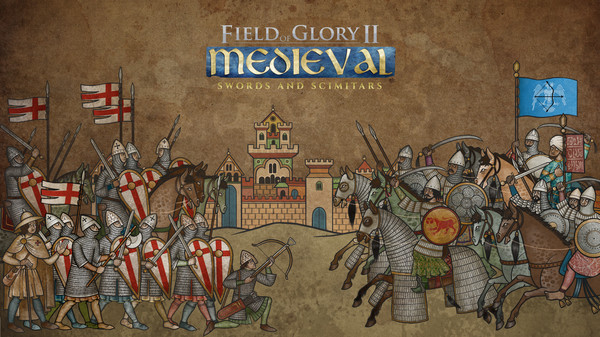
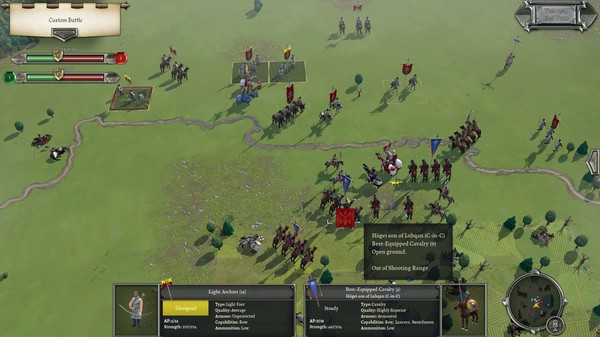
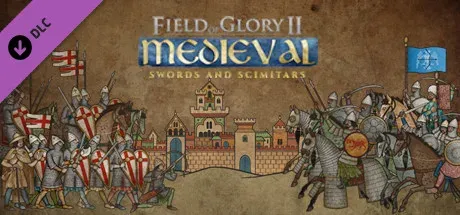
Field of Glory II: Medieval - Swords and Scimitars is a turn-based tactical game set in the High Middle Ages and it's the second DLC for Field of Glory II: Medieval. Developed by the legendary Richard Bodley Scott it brings the best from the tabletop world into the best digital framework.

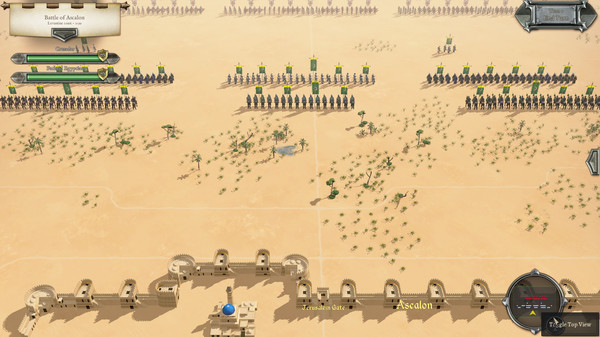
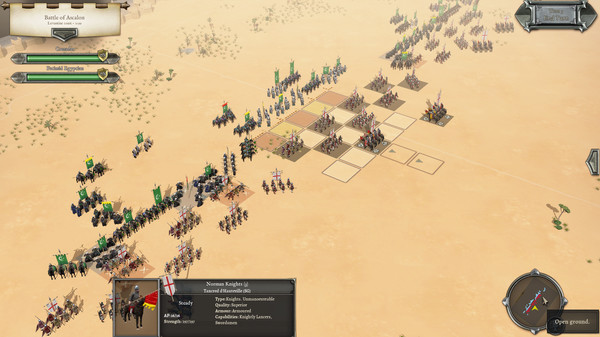
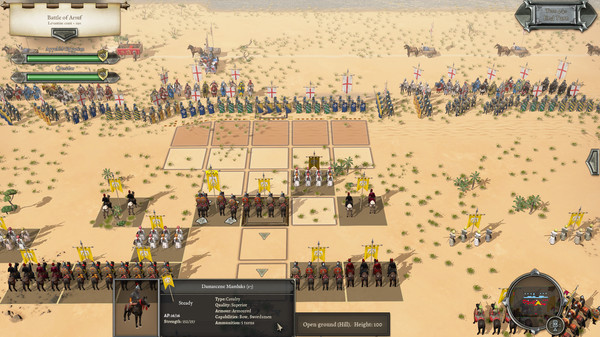
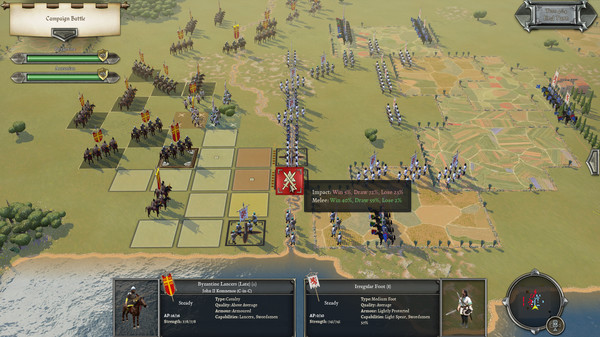
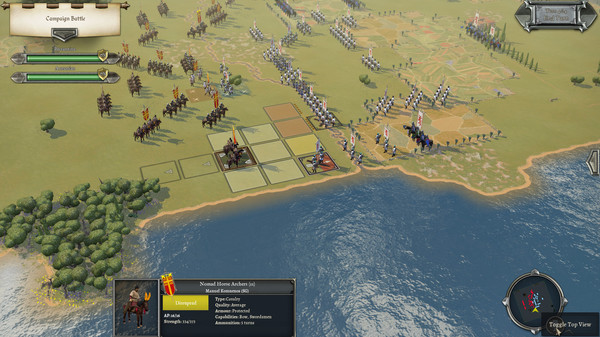
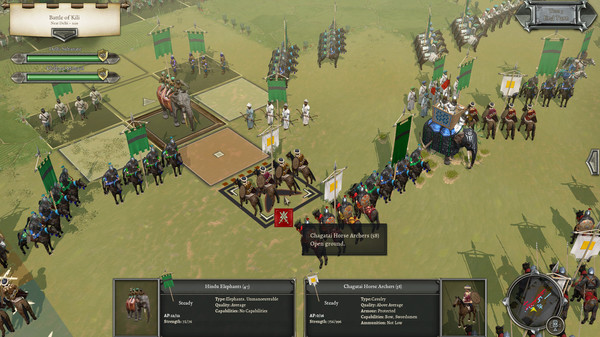
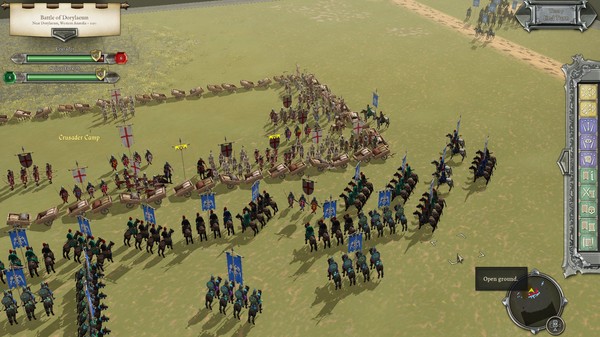
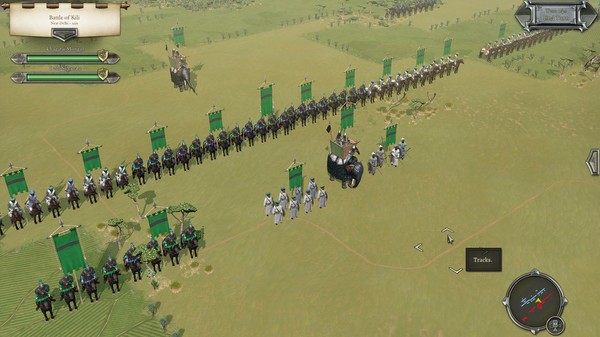
This expansion is for players who already enjoy the turn-based battles of Field of Glory II and want to see how the crusade era plays out on the other side of the map. The fights here feel different from the European clashes you know, so your army composition and tactics need a fresh look. The mood is tense and deliberate: discipline in the line and well-timed reserves matter more than reckless charges. What to expect: - New armies with unfamiliar cavalry and archers that force you to rethink your usual unit pairings. - You can play against the AI or a human opponent, and the difference in style shows up quickly. - The scenarios and maps keep you busy for several evenings, especially when you tune your army for a specific campaign. - The expansion requires the base game on your account, but it builds on what you already know rather than changing it. You receive a Steam gift: after payment, send your Steam quick invite link, and the bot will add you as a friend and send the game as a gift to your account. To buy Field of Glory II: Medieval - Swords and Scimitars (DLC) Steam gift, simply send the link and the order is processed. The Byzantine Empire began the 11th century in a strong position - they had pushed their frontier eastwards against the fragmented Muslim emirates, and had completely destroyed the Bulgars in the Balkans. All that was to change in 1071, when they suffered a catastrophic defeat at the hands of the Seljuq Turks at the Battle of Manzikert. These nomadic conquerors had recently converted to Islam, and had swiftly established a Sultanate ruling from Afghanistan to Palestine. Following Manzikert they took nearly all of Anatolia from the Byzantines. As the Byzantine Emperor Alexios Komnenos struggled to stem the Seljuq advances, he appealed to the West for mercenaries. This request was seized upon by Pope Urban II, who possibly saw it as an opportunity to further his own aims. At the Council of Clermont in 1095 he called for a Crusade to save the eastern churches and recover the Holy Land from the Muslims. The timing was fortuitously right, as the mighty Seljuq Empire had begun to fragment, the Sultanate of Rûm in Anatolia (modern Asiatic Turkey) having seceded from the Great Seljuk Empire in 1077, and the local Syrian atabegs being in practice semi-independent and disunited. The First Crusade eventually captured Jerusalem in 1099, and established a number of Crusader states in Palestine and Syria. In doing so they created bitter resentment between Muslims, Western Christians and the Byzantines that would lead to two centuries of conflict. Several major Crusades were to follow the First, as the Crusader states fought for their existence against a succession of resurgent Islamic states: the Fatimids, Zangids, Ayyubids, and finally the Mamluks, who extinguished the last Crusader stronghold of Acre in 1291. Meanwhile, further East, a far greater threat to Islamic civilisation was emerging. The rapidly expanding Mongols had destroyed the Khwarazmian Shahdom by 1231, the Christian kingdom of Georgia fell in 1239, and the Seljuqs were defeated and forced into vassaldom in 1243. By 1258 the Assassins of Alamut, and the vestigial remains of the once great Abbasid Caliphate, had also been conquered. Only the Mamluks of Egypt were able to finally bring the Mongol advance to an end, with their victory at Ain Jalut in 1260. In the Balkans the Byzantine Empire remained strong until 1204, when Constantinople fell to the Fourth Crusade. Thereafter much of the old empire was taken over by the Western Crusaders and the Venetians, who had masterminded the whole sordid enterprise. The Byzantines held out in four fragments: the Empires of Trebizond and Nicaea, and the Despotates of Rhodes and Epirus. Eventually the Empire of Nicaea retook Constantinople in 1261, but the power of the Byzantines had been broken forever and they were now only a minor state. - 20 more nations and factions covering South Eastern Europe and the Middle East from 1040 AD to 1270 AD. These include Arabs (Syria/Iraq), Armenians (Cilician), Bulgarians, Byzantines (Main Empire, also Nikaia, Epiros and Trebizond), Crusaders, Cypriots (Lusignan Kingdom), Dailami, Fatimid Egyptians, Georgians, Ghaznavids, Ghurids, Indians (Rajput, other Hindu, Muslim), Khwarazmians, Latin States in Greece, Mamluk Egyptians, Mongols (Ilkhanids), Pechenegs, Seljuq Turks, Serbians and Syrian States. Each of these has their own historically accurate banner. - 35 more units (11 brand new, 24 new to Medieval), allowing the troops of all of the new factions to be accurately represented. - 41 more army lists allowing historically realistic armies for each of the above factions and their allies at different dates during the period, and bringing the total number of Medieval army lists to 146. In addition armies can include contingents from historical allies. This gives around one hundred thousand permutations. You will never run out of new matchups to try. - 8 more historical scenarios covering key engagements of the period on an epic scale. These include Manzikert 1071, Dorylaeum 1097, Ascalon 1099, Sirmium 1167, Arsuf 1191, La Forbie 1244, Homs 1281 and Kili 1299. - 53 more historical matchups added to Quick Battle mode, increasing the total to 150, playable from either side. - 4 more historically-based campaigns covering major leaders and conflicts of the era: Alexios Komnenos, The First Crusade, Manuel Komnenos, Saladin. - Sandbox campaign expanded to include all the new army lists, allowing you to lead any nation (and their historical allies) against any other nation (and their allies) - giving over twenty thousand permutations. - Time Warp custom battles modules expanded to include all the new army lists.

System requirements

Minimum: - OS *: Windows 8 / 10 - Processor: 2.0GHz i5/A8 or better - Memory: 6 GB RAM - Graphics: 1GB DirectX 9 Compatible Graphics Card - DirectX: Version 9.0c - Storage: 5 GB available space Recommended: - OS *: Windows 8 / 10 - Processor: 2.0GHz i5/A8 or better - Memory: 8 GB RAM - Graphics: Discrete 2GB DirectX 9 Compatible Graphics Card - DirectX: Version 9.0c - Storage: 6 GB available space

FAQ

Yes, the full version of Field of Glory II: Medieval must be on your account and must not be hidden. Without it the DLC gift cannot be sent.

After payment our bot adds you as a friend using your quick invite link and sends the gift. Accept it in your Steam notifications and the DLC will appear in your library.

In Steam open Friends → Add a Friend and copy your quick invite link. Each link works once, so create a new one for every order.

The region your Steam account is registered in. A gift for another region cannot be accepted.

Order information

Genre
Simulation, Strategy, Single-player, Multi-player, PvP
Platform
Steam

Where to get the link?
  1. Open Steam and go to "Friends" -> "Add a Friend"
  2. In the "Quick Invite Link" section, click "Copy"
  3. Paste the link here. It is one-time use: create a new one for each order
+18

17.06 USD

Order information
Genre
Simulation, Strategy, Single-player, Multi-player, PvP
Platform
Steam

Where to get the link?
  1. Open Steam and go to "Friends" -> "Add a Friend"
  2. In the "Quick Invite Link" section, click "Copy"
  3. Paste the link here. It is one-time use: create a new one for each order
+18

Secure transactions

All payments are protected by modern encryption and processed by trusted payment partners.

24/7 Support

Our support team works around the clock and is ready to help with purchases, payments, and any questions.

Full refund guarantee

In case of any issues with your order, we guarantee a refund according to our refund policy.

We use cookies to keep the site working and to remember your settings. Analytics cookies are only used with your consent. Learn more